Tesla Roadster 2026: Rocket Technology, Engineering Secrets, and the Story Behind Elon Musk’s Most Ambitious Electric Car — WIRED (October 16, 2026)
Article updated: October 20, 2026
Reporting basis: WIRED’s October 16, 2026 article by Jeremy White. The technical figures below are claims attributed to Tesla or its engineering leadership in that reporting; they should not be treated as independently verified production specifications. The vehicle described is still under development, with production reported as planned for 2028.
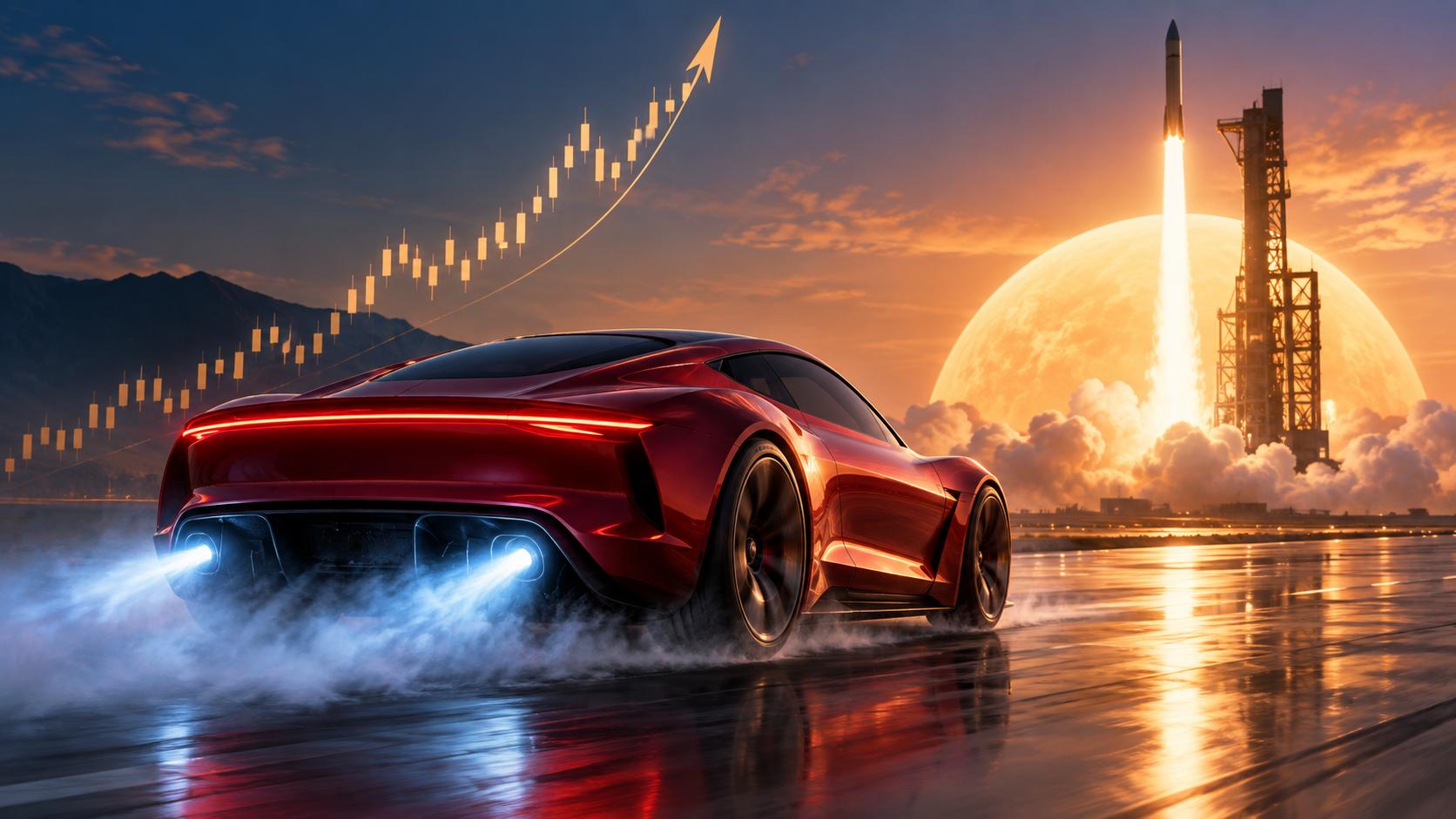
What makes the new Roadster different?
The Tesla Roadster has always carried a bigger promise than simply being a fast electric car. The original helped demonstrate that battery-powered vehicles could be desirable performance machines. The next-generation Roadster, first announced years ago, is being positioned as something more extreme: an electric sports car that combines high output, aggressive traction technology and a SpaceX-inspired cold-gas thrust system.
In its October 16, 2026 report, WIRED explains how Tesla says the Roadster 2 works, drawing on comments from Tesla vehicle engineering head Lars Moravy and details surrounding a demonstration at SpaceX’s development and testing facility in McGregor, Texas. The event reportedly showed a driverless prototype making a dramatic jump using a combination of suction and thrusters.
The distinction matters: a demonstration can show a prototype performing a specific maneuver, but it does not prove that every advertised performance figure, safety case, regulatory requirement or production detail is settled. The Roadster should therefore be understood as a highly ambitious development programme—not a normal production car with a complete, independently tested specification sheet.
Powertrain, speed and range
WIRED reports that Tesla vehicle engineering head Lars Moravy described a rear-wheel-drive layout using two electric motors, with output above one megawatt—roughly 1,341 horsepower—and torque above 1,400 newton-metres. That would be an unusual choice for a vehicle marketed around extreme acceleration: rather than sending power to all four wheels, the reported configuration sends it through the rear axle.
Tesla’s reported targets include a top speed of up to 230 mph for the version equipped with the full thrust system, and a 0–60 mph time below one second. WIRED also reports a target range above 300 miles and a claimed fast-charging window from 15 to 80 percent in about 10 minutes. These are reported targets and claims, not a substitute for final EPA or other market-specific ratings, independent testing, or a production vehicle test drive.
| Reported detail | What WIRED reports | How to interpret it |
|---|---|---|
| Drive layout | Rear-wheel drive | All drive power is reported to reach the rear wheels. |
| Power | More than 1 megawatt, about 1,341 hp | A reported engineering figure, not an independently measured production result. |
| Torque | More than 1,400 Nm | Reported output; real-world traction and performance depend on the full vehicle system. |
| Top speed | Up to 230 mph for the Thrust version | A target that requires production-car verification. |
| Acceleration | Claimed 0–60 mph in under one second with the full system | A highly unusual claim that needs controlled, independent testing. |
| Range and charging | Over 300 miles; 15–80% in about 10 minutes | Reported targets; actual range and charging depend on test cycle, battery, charger and conditions. |
The suction system: grip from underneath
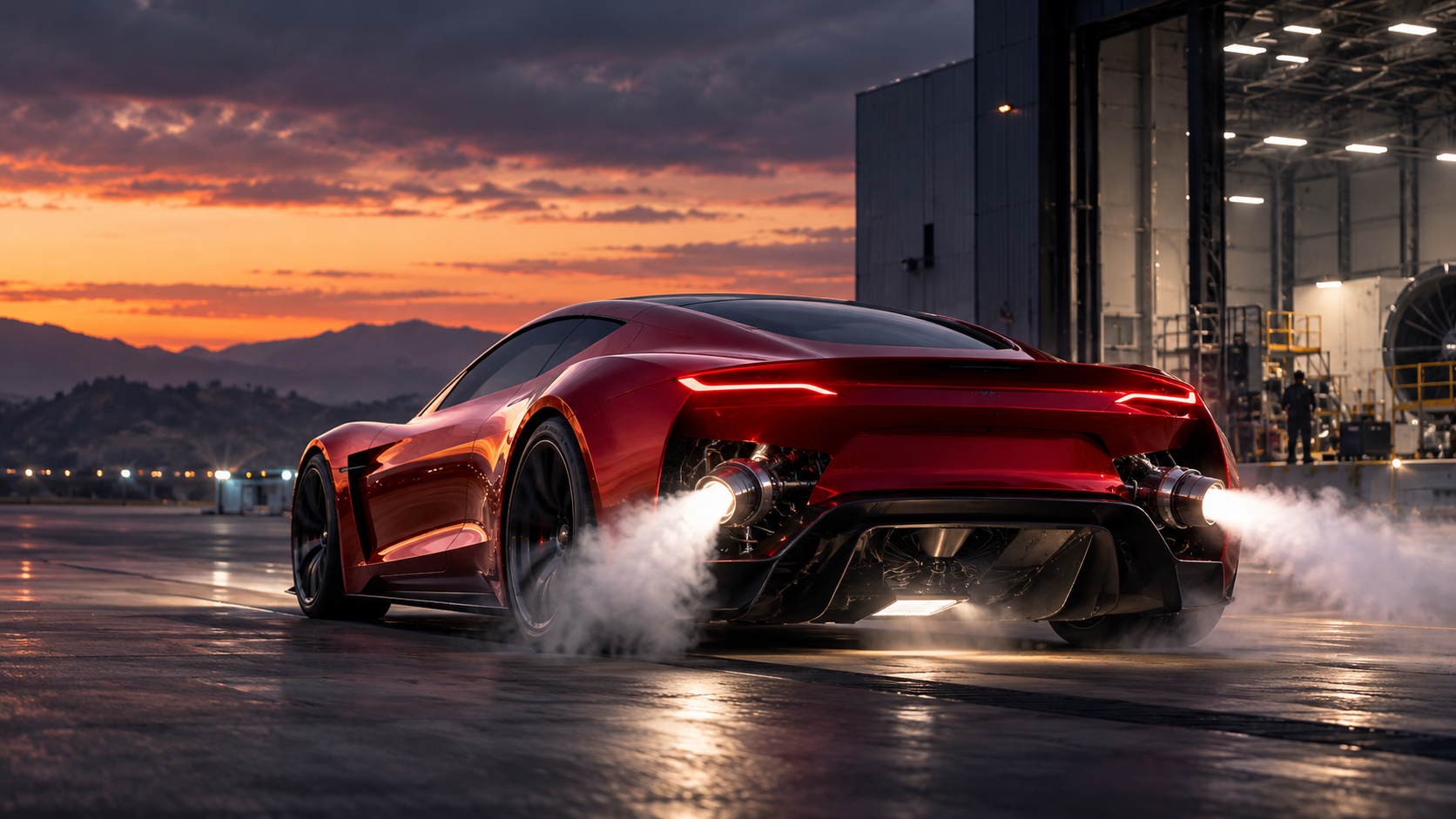
One of the most unusual ideas in WIRED’s account is a system Tesla calls the “sucker system.” Rather than relying only on wings and bodywork to create aerodynamic downforce, the system reportedly uses four 20-kilowatt fans and deployable skirts around the underside of the car. The fans are intended to pull air from beneath the vehicle, creating a low-pressure area that presses the car toward the road.
Conventional aerodynamic downforce generally becomes more effective as a car moves faster because it depends on airflow. A fan-assisted system can, in principle, generate useful downforce at lower speeds, where a conventional wing may not yet be producing enough force. The concept has a motorsport precedent: fan-generated downforce has been explored in specialist high-performance vehicles, including the McMurtry Spéirling.
WIRED reports that Tesla’s engineering lead described the system as capable of generating more than two g of cornering force in certain conditions, including at speeds below 50 mph. That number should be read as a reported claim, not a guarantee for all road surfaces, temperatures, tyres or driving situations.
The skirts and fans also add complexity. The system must manage airflow, debris, wear, noise, heat, electrical demand and the risk of losing suction. A demonstration on a prepared ramp is not equivalent to proving safe operation on wet, uneven or damaged public roads. If the technology reaches production, its reliability and maintenance requirements will be as important as the headline performance.
The SpaceX-inspired cold-gas thrusters
The second unusual technology is a cold-gas thrust system associated with SpaceX. A cold-gas thruster does not burn fuel in a combustion chamber. Instead, it releases stored pressurised gas through a nozzle; the escaping gas produces thrust. Such systems are used in spacecraft for orientation and small manoeuvres because they are mechanically simpler than many combustion-based rocket systems.
According to WIRED, the Roadster’s reported system stores nitrogen under high pressure in a carbon-fibre-wrapped pressure vessel. The Thrust version is said to use additional thrusters around the vehicle to influence its motion and help with the demonstration’s airborne manoeuvre. The report says that the extra hardware occupies the passenger-seat area, turning the version equipped with the full “flight system” into a single-seater.
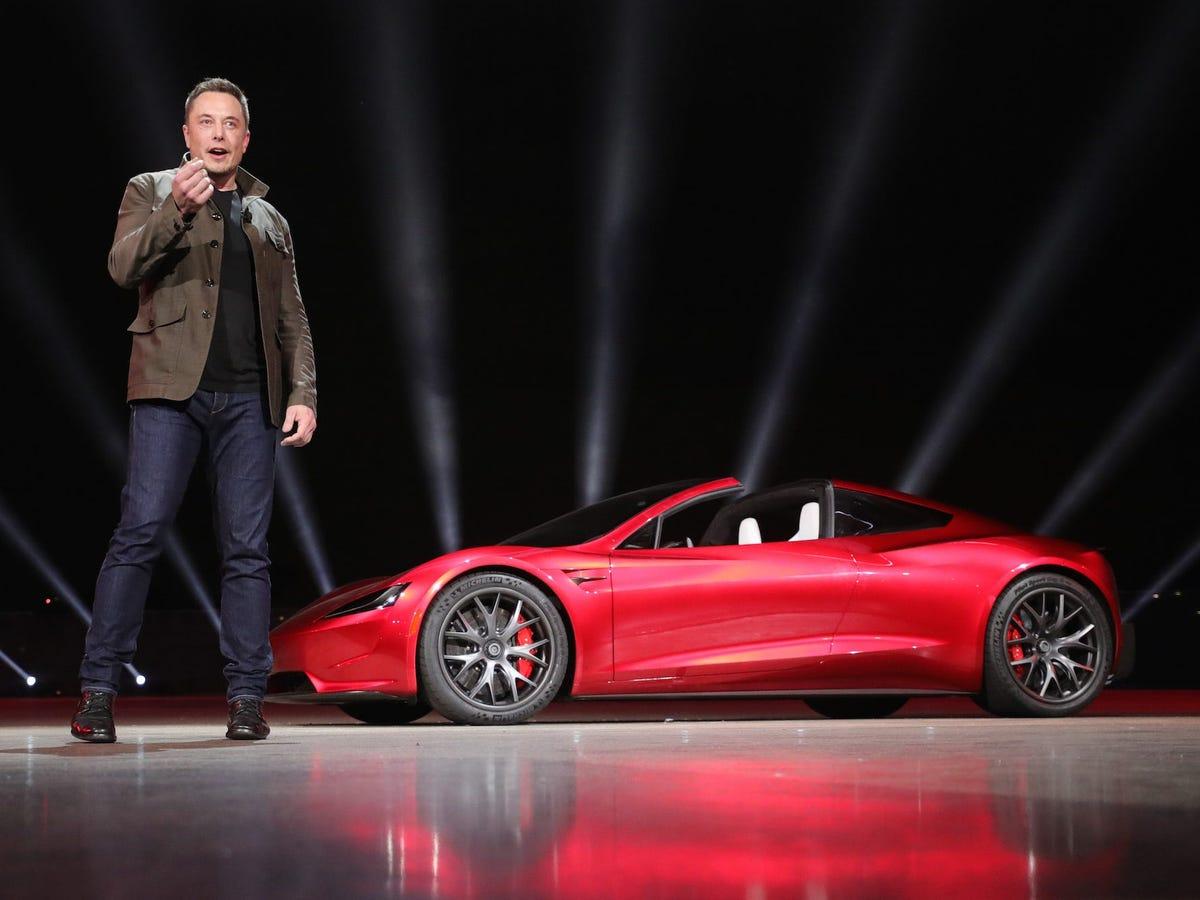
There is an important difference between a rocket-assisted demonstration and an everyday driving feature. Pressurised gas is finite, thrust changes as the tank empties, and high acceleration places serious demands on the occupants, structure, tyres and control systems. The system also introduces pressure-vessel inspection, refilling, handling and safety questions that a conventional EV does not face.
WIRED reports that filling the system’s nitrogen tanks currently takes around six to seven hours, while Tesla is said to be working on a process that could reduce the time substantially. Until a production-ready system and its operating procedures are documented, the refilling process remains a practical limitation rather than a solved detail.
The engineering trade-offs behind the spectacle
Traction versus complexity
More downforce can help tyres generate grip, but it does not remove the limits imposed by tyre temperature, road surface, suspension, vehicle balance and driver inputs. Fans, skirts, pressure vessels and thrusters may improve performance in specific situations, yet each system adds mass, control requirements, failure modes and maintenance work.
Performance versus usability
The reported Thrust configuration sacrifices the passenger seat to accommodate additional hardware. That makes the car less practical as a two-person roadster, even if the system delivers a dramatic demonstration. Buyers will need to understand exactly which features belong to each trim and whether the most extreme equipment is intended for ordinary road use, a limited demonstration role, or both.
Range and charging still need real-world proof
A high-performance EV must balance battery capacity, power delivery, cooling and weight. A range target above 300 miles may sound substantial, but high-speed driving can consume energy quickly. A 10-minute charging claim also depends on the charger’s power, battery temperature, charging curve and the availability of compatible infrastructure. Final independent testing will matter more than a single headline number.
Safety and regulation
A vehicle designed to leave the ground, even briefly, raises safety questions beyond those associated with a conventional sports car. The demonstration described by WIRED was reportedly conducted without a human driver. That reduces the risk to a test occupant during the stunt, but it does not establish that the same behaviour is safe, legal or appropriate on public roads. Vehicle certification, road rules and any rules relevant to the thrust system will need to be addressed before customers can use a production version.
Delays, reservations and production uncertainty
The Roadster’s timeline is part of its story. WIRED notes that the vehicle was announced years ago and that previous delivery expectations were missed. Its October 2026 report says production is not expected to begin until 2028. Given the project’s history, that date should be treated as a reported plan rather than a guaranteed delivery schedule.
The same report describes reservation payments for two versions: a Performance variant and a more expensive Thrust version. It says the initial reservation is US$5,000, followed by a much larger payment due shortly afterwards—US$45,000 for Performance and US$245,000 for Thrust. Reservation terms, refundability, taxes, final pricing and delivery conditions should be checked directly in Tesla’s current official order documentation before anyone commits money.
For a prospective buyer, a reservation is not the same as a confirmed delivery date or a finalised specification. Before paying, check the contract and cancellation terms, what is included in each trim, the status of local road approval, final warranty coverage and whether the displayed performance figures are estimates or certified values.
What is confirmed—and what remains uncertain?
| Topic | What the available reporting supports | What still needs confirmation |
|---|---|---|
| Prototype demonstration | WIRED reports a dramatic prototype demonstration using suction and thrusters. | Independent repeatability, production configuration and real-world operating limits. |
| Power and speed | Engineering figures and targets were attributed to Tesla’s vehicle engineering leadership. | Final certified specifications and independent performance testing. |
| Range and charging | Targets above 300 miles and a rapid 15–80% charge were reported. | Market-specific range ratings, charging conditions and test results. |
| Production | WIRED reports production is planned for 2028. | Whether that schedule holds and when customer deliveries begin. |
| Road legality | The reporting raises regulatory questions about the thrust-assisted “flight” capability. | Final certification, permitted use and any restrictions on the system. |
The most useful way to read the Roadster story is to separate the engineering concept from the commercial product. Tesla’s reported approach is striking because it combines electric propulsion with fan-generated downforce and cold-gas thrust. But the car’s ultimate significance will depend on whether those ideas can be made reliable, certifiable, maintainable and available to customers—not only on whether a prototype can perform an extraordinary stunt.
Frequently asked questions
Is the Tesla Roadster 2026 available to buy now?
WIRED reports that reservations are available, but production is planned for 2028. A reservation does not mean a customer can take delivery now. Check Tesla’s official order terms for current availability, cancellation rules, final specifications and local-market conditions before paying a deposit.
Can the new Tesla Roadster really fly?
WIRED describes a demonstration in which a prototype reportedly used suction and cold-gas thrusters to perform a dramatic airborne manoeuvre. That is not the same as an aircraft or a practical flying car. The system’s production status, operating limits, safety case and legal use remain important questions.
How does the Roadster’s suction system work?
The reported design uses fans under the car and deployable skirts to draw air from beneath the chassis. This creates a pressure difference that pushes the vehicle toward the surface, helping generate downforce even when normal aerodynamic wings are less effective.
What are cold-gas thrusters?
Cold-gas thrusters release stored pressurised gas through nozzles to create thrust without combustion. Spacecraft use similar technology for orientation and small manoeuvres. In a road vehicle, the system would require high-pressure storage, careful control and strict safety procedures.
What is the reported top speed?
WIRED reports a target of up to 230 mph for the Thrust version and 210 mph for the Performance version. These are reported figures for a vehicle still under development, not independently verified production-car test results.
When will production begin?
WIRED’s October 16, 2026 report says production is planned for 2028. Because the project has experienced delays, buyers should treat this as a current reported plan rather than a guaranteed start date or delivery commitment.
Should buyers reserve one now?
That depends on risk tolerance and the actual reservation agreement. Before paying, review the refund and cancellation terms, the amount due after the initial reservation, the trim-specific equipment, local road approval, warranty coverage and the difference between company targets and certified specifications.
Conclusion: a bold engineering experiment, not yet a settled production story
The next-generation Roadster is ambitious because it pushes beyond the usual electric-car recipe. Its reported fan system aims to create downforce at low speeds, while cold-gas thrusters bring spacecraft-style hardware into a vehicle demonstration. Together, these technologies could make the Roadster one of the most unusual performance-car projects in development.
But spectacle is only the beginning. A successful production car must also deliver predictable handling, reliable hardware, acceptable service requirements, certified safety and clear ownership terms. Until those pieces are demonstrated in a production-ready vehicle, the most accurate description is a remarkable engineering proposition with major questions still to answer.
Sources and references
- WIRED — “Here’s Exactly How Tesla Made Its New 230-Mph Car ‘Fly’,” by Jeremy White, October 16, 2026. Primary article used for the reported engineering details, performance claims, reservation information and production timeline.
- Tesla — Roadster. Check this official page for any current company specifications, ordering details and updates. Availability and page content may change.
Editorial note: This article is an independent explanatory summary of the linked reporting. Performance and engineering figures are attributed claims, not independently certified results. The featured visual is a conceptual illustration and is not a verified photograph of a production vehicle.