The Complete Idiot’s Guide to Buying a Bike in India
A beginner-friendly checklist for budget, engine or motor choice, mileage, safety, test rides, finance, and ownership.
Set the Budget Before Visiting a Dealer
A bike purchase becomes easier when the budget is decided before the showroom visit. Start with the amount you can safely spend without disturbing emergency savings and other financial commitments. Then separate the on-road cost from the ex-showroom price. Registration, insurance, taxes, accessories, and other charges can materially change the final amount. Decide how much you can pay as a down payment and how much monthly payment would remain comfortable after rent, food, utilities, savings, and existing loans. Do not let a salesperson build the budget around an EMI you have not independently checked. A bike that fits the loan approval limit may still be too expensive for your household cash flow.
Your personal budget should be the decision-maker, not the financing department.
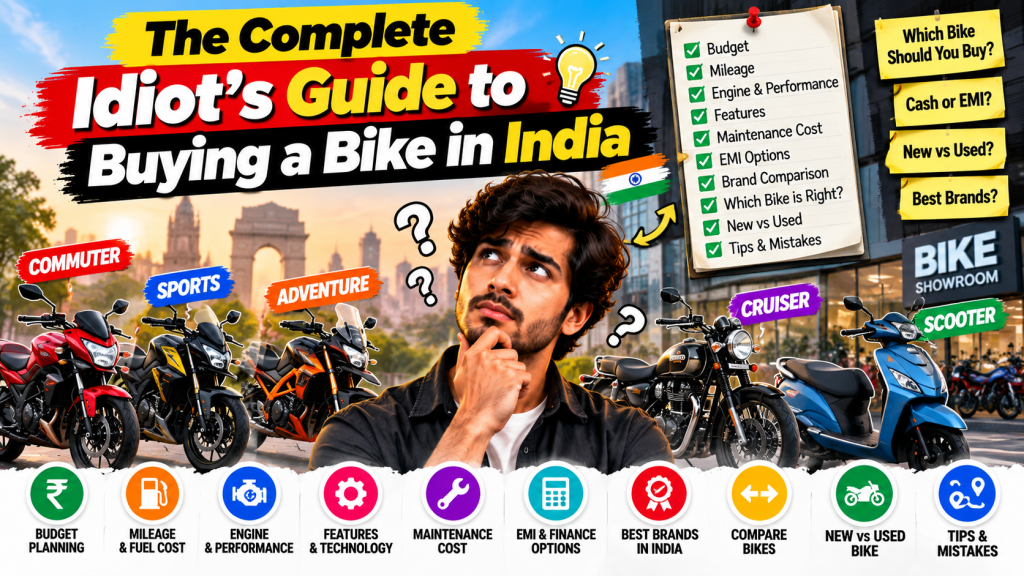
Choose the Type of Bike for the Job
The best bike is not always the fastest or the most feature-rich. First decide the type of use: city commuting, highway travel, rough roads, touring, occasional weekend riding, carrying a passenger, or a mix of these. A lightweight commuter can make more sense for daily traffic because it is easier to handle and often economical to run. A larger motorcycle may offer more comfort or performance on highways but can bring higher purchase, fuel, insurance, and maintenance costs. Scooters offer convenience and storage but provide a different riding experience. Electric two-wheelers introduce charging considerations. The purpose of the vehicle should guide the category.
Once the category is right, model comparisons become much simpler.
Look Beyond Claimed Mileage
Mileage is important, but it should be evaluated as a real-world cost rather than a single number in a brochure. Traffic, rider weight, tyre pressure, road conditions, service condition, and riding habits affect fuel use. Ask existing owners about their typical city mileage and try to distinguish between short-term excitement and long-term experience. Calculate your monthly distance and estimate the annual fuel or charging cost. A motorcycle that costs slightly more but gives a clearly better ownership experience may be reasonable; a much more expensive model that saves a small amount on fuel may not be.
Also consider fuel availability and charging convenience in the areas you regularly visit. The best powertrain is the one you can operate easily every week.
Check Safety and Ergonomics
Before buying, inspect braking performance, tyre size and quality, lighting, visibility, riding position, mirrors, and available safety technology. You should be able to place both feet comfortably enough for your ability, reach the controls without awkward stretching, and manage the bike at low speed. A test ride should include a slow U-turn, an ordinary road, a small amount of rough surface, and a controlled braking test where safe and legal. Wear or simulate the gear you will normally use so you can judge comfort realistically. Also budget for a quality helmet and other protective equipment.
Safety is not an optional accessory. A slightly higher purchase price for good tyres or better braking hardware can be more meaningful than a decorative feature.
Do a Proper Test Ride
A short test ride is one of the most valuable steps in a bike purchase. Listen for unusual vibrations or noises, notice clutch and gearbox feel, evaluate throttle smoothness, and check whether the suspension works comfortably on roads you actually use. Observe heat around the rider in traffic and whether the seat becomes uncomfortable after some time. Try parking and reversing manually. Pay attention to low-speed balance because many daily rides involve traffic, turning, and narrow spaces rather than high-speed riding. If possible, test more than one model on the same day and take notes.
A bike that feels exciting for ten minutes may not be the bike you want after commuting on it for an hour every weekday.
Understand Service and Parts
Ownership quality depends heavily on after-sales support. Ask about the service schedule, expected routine maintenance, warranty terms, roadside assistance, consumables, and approximate costs for common wear items. Check whether an authorized service center is reasonably accessible from your home or office. If you live outside a major city, parts availability can matter as much as the bike itself. A model with impressive specifications but difficult parts access can become frustrating. Ask what is included in free or paid service and whether software or battery-related maintenance applies to electric models. Do not rely only on a salesperson’s verbal statement; read the warranty and service documents carefully.
Think About Loan and EMI Carefully
A bike loan should make the purchase smoother, not hide the true cost. Compare lenders on total repayment, not just the advertised interest rate. Check processing fees, foreclosure terms, insurance bundling, and any documentation charges. A shorter tenure can increase the EMI but reduce the overall interest paid. A longer tenure does the opposite. Choose a payment level that leaves enough monthly surplus for savings and unexpected repairs. Avoid borrowing the down payment through a credit card or another expensive loan. When the financing cost becomes too high, a cheaper model with a manageable EMI is usually better than a dream model purchased under pressure.
Take Delivery Like a Checklist
The delivery day is not only a celebration; it is a verification step. Check the vehicle identification details, manufacturing month and year where relevant, odometer reading, paint and body condition, tyre condition, documents, insurance information, keys, toolkit, manuals, and warranty paperwork. Confirm that the registration and policy details are correct. Check lights, horn, indicators, brakes, instrument cluster, charging equipment if applicable, and visible fasteners. Take photographs of the vehicle and documents for your own records. Make sure any promised accessories or discounts are reflected correctly. A few minutes of careful inspection can prevent later confusion and makes it easier to raise a problem while the dealer is still responsible for delivery condition.
Keep the Bike Financially Healthy
The purchase is only the beginning of ownership. Follow service intervals, maintain tyre pressure, use recommended lubricants or consumables, and respond to warning lights promptly. Keep insurance active and maintain a small maintenance reserve. Cleanliness helps you notice leaks, loose components, damage, and tyre wear early. If the bike is financed, protect your cash flow by continuing savings alongside the EMI rather than treating the loan payment as the only financial goal. Over time, a well-maintained bike can be easier to sell and less likely to generate sudden expensive repairs. The sensible buyer thinks about the whole ownership period, not just the day the bike leaves the showroom.